Parents often ask why a child who is bright, caring, and thoughtful can suddenly melt down, shut down, or argue in ways that do not match the situation. From an experiential and sensory lens, behavior is not random. It is a visible signal of what the nervous system is attempting to manage inside the child’s body. When we understand how a child’s nervous system works, the patterns that look like defiance or disinterest begin to make more sense. We can respond with precision rather than pressure, and we can coach skills that last.
This article offers a clear, practical framework for therapy-literate parents who want depth rather than generic tips. It integrates an attachment based, experiential view with sensory and somatic understanding that guides our work with families in Brooklyn.
The big idea: Behavior follows state
Children do not first think, then feel, then act. Much of the time the sequence is reversed. Their body senses threat or safety, the nervous system shifts state, emotions surge or flatten, and only then does the thinking brain try to make sense of what just happened. If we want behavior to change, we first work with the state the child is in.
A helpful way to picture states:
- Settled and connected: The system feels safe enough. Curiosity, play, learning, and cooperation are possible.
- Mobilized: The system prepares for action. This can look like worry, restlessness, irritability, quick frustration, or an urge to control.
- Shut down: The system goes low and protective. This can look like zoning out, avoidance, collapse, or a flat affect.
Children move through these states many times each day. The shift can be triggered by sensations, emotions, demands, transitions, or social cues. The goal is not to keep a child in one perfect state, but to help them recognize and navigate their shifts with support from a steady adult.
Sensory processing is the front door to regulation
Before the brain interprets a situation, the body has already taken in sensory information. For many children, especially those with neurodivergent profiles, the sensory front door is where overload begins. A few core systems shape daily experience:
- Interoception: Internal signals like heartbeat, hunger, fullness, temperature, or the flutter of anxiety. Many children struggle to notice these signals in real time.
- Proprioception: Body position and pressure. Kids who chew on clothing, crash into cushions, or prefer tight hugs may be seeking proprioceptive input to feel anchored.
- Vestibular: Balance and movement. Spinning, swinging, or sudden motion can be organizing for some children and dysregulating for others.
- Tactile, auditory, and visual: Clothing textures, noise levels, echoes, brightness, and visual clutter all affect comfort and capacity.
A child who appears oppositional may actually be trying to manage discomfort that feels invisible to adults. When we adjust environments and routines to match a child’s sensory profile, cooperation often rises without a lecture or consequence.
Emotions ride on top of sensations
Sensations arrive first, emotions follow. A child who is hungry, overheated, or tightly wound from the school day may show anger or anxiety that seems out of proportion. When parents focus only on logic, the child experiences it as pressure rather than help. When parents first address the body, the thinking brain comes back online.
Simple sequence at home:
- Notice the body. Is the child restless, pale, flushed, rigid, slumped, or breathing fast.
- Soften the conditions. Adjust light, sound, clothing, or seating. Offer water or a snack. Slow the pace.
- Co-regulate. Share calm with your presence and voice. Then invite a regulation activity.
- Name and plan. Only after the body settles do problem solving and agreements stick.
Co-regulation is not a technique. It is a relationship
Children borrow regulation from adults. When your nervous system is steady, flexible, and non-reactive, your child’s system has a better chance of settling. Co-regulation is the moment when your tone, posture, breathing, and timing communicate safety. It looks like:
- Sitting at the child’s level and softening your face
- Slowing your speech and pausing between sentences
- Matching the child’s pace, then gradually inviting a slower rhythm
- Offering a choice that honors sensory needs, such as stand or sit, lights on or dim, talk now or draw first
Parents do not need perfect composure. You only need to be one step steadier than your child and willing to repair when you are not.
Patterns that often get mislabeled
- Defiance that is really protection: A child refuses shoes each morning. The seams and pressure are painful, and the rush to leave spikes arousal. The “no” is the body saying this is too much.
- Zoning out that is really shutdown: A child stares out the window during homework. The task feels complex. The body lowers energy to cope. This is not laziness. It is a survival strategy.
- Arguing that is really mobilization: A child debates every instruction. The nervous system is revved. Words become a way to discharge energy and regain control.
When we understand the pattern, we design supports that work with the body rather than against it.
A practical map: notice, name, normalize, and choose
Notice: Track early signs. Tight shoulders, quick speech, fidgeting, or a blank stare.
Name: Put gentle language to the state. “Your body looks buzzy” or “You are going quiet inside.”
Normalize: No shame. “Bodies do this when things feel big. You are not in trouble.”
Choose: Offer one or two regulating choices that fit the child’s profile.
Examples of choices:
- For mobilized energy: wall push-ups, carry the laundry basket, chew a crunchy snack, slow breathing with a hand on the belly, a quick outside lap
- For shutdown energy: rhythmic movement like swinging arms, warm tea, a weighted lap pad, a predictable step-by-step plan with checkboxes, low-demand connection like drawing side by side
Over time the child learns what their body is asking for, and the menu becomes personalized.
Transitions are where many families lose connection
The nervous system prefers predictability. Transitions load the system with uncertainty. Morning routines, leaving the playground, starting homework, and bedtime are common hotspots. Three levers help:
- Preview: Let the child’s body see the future. “Two more slides, then shoes.” Visual timers and simple checklists reduce the cognitive load.
- Bridge: Carry something familiar across the transition. A fidget, a soft item, a water bottle, or a song can anchor the body while the setting changes.
- Pace: Move a little slower than your instinct. The extra thirty seconds you give to connect can save twenty minutes of conflict.
Parent involvement as a clinical choice
Including parents is not an afterthought. It is often central to change. We work collaboratively and adjust the level of parent involvement based on what is clinically right for the child. Options include:
- Caregiver sessions to understand patterns, build language, and practice co-regulation
- Dyadic work where parent and child meet together to strengthen safety cues, repair cycles, and shared routines
- Brief check-ins to align home and therapy goals without overwhelming the child’s privacy
The target is not perfect parenting. The target is a parent child system that can recognize state shifts earlier, respond with steadiness, and return to connection more quickly.
What experiential therapy looks like in practice
Experiential work invites children to learn through doing and feeling, not only through talking. Sessions can include:
- Sensory-informed play that lets the child express and reorganize experience
- Movement, rhythm, and breath work that help the body settle
- Creative tasks like drawing, building, or role play to surface implicit memories and themes
- Gentle body awareness so the child notices early signals and chooses support before overwhelm arrives
- Micro-experiments where parent and child practice co-regulation in the room, then translate it to daily life
The emphasis is on lived experience. Insight follows the body’s experience rather than leading it.
School collaboration without pathologizing the child
Many children hold it together at school and unravel at home, or the reverse. When collaboration is helpful, we focus on sensory supports and regulation routines rather than labels. Helpful moves include:
- Creating a quiet landing plan after recess or lunch
- Offering proprioceptive breaks before writing or math
- Adjusting seating and light
- Agreeing on a short signal the child can use to request a reset without calling attention
Small changes can protect a child’s capacity without forcing them into a mold that does not fit.
Building a home environment that cues safety
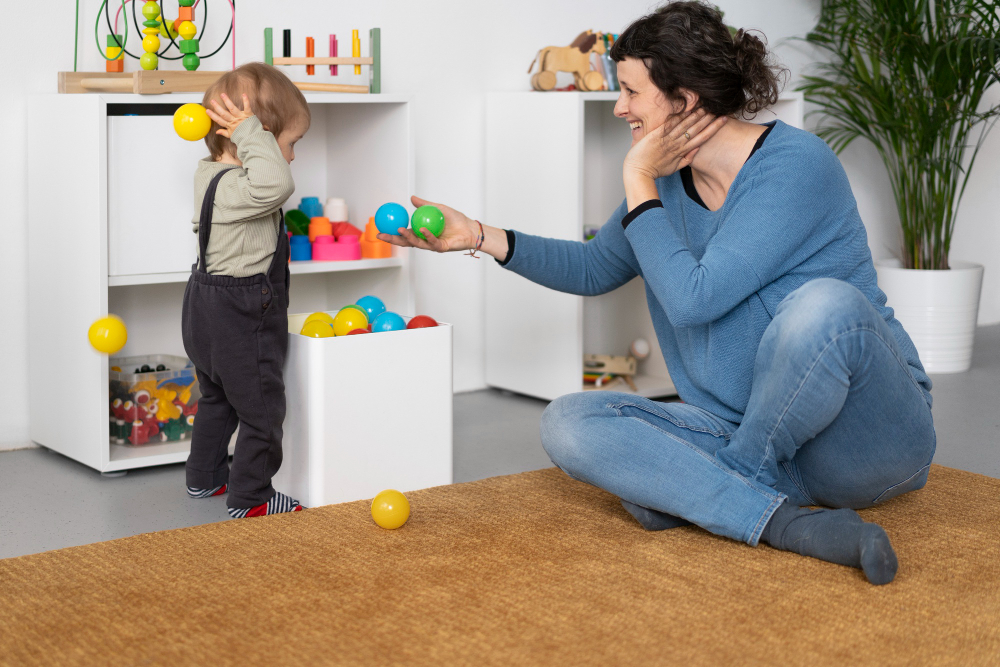
You do not need to redesign your apartment to help your child’s nervous system. A few thoughtful shifts make a real difference in a dense, stimulating city like Brooklyn.
- Keep one room corner uncluttered and predictable. This becomes the landing spot.
- Use soft light in the evening and reduce screen intensity one hour before bed.
- Rotate a small set of sensory tools rather than a large bin. Too many choices can be disorganizing.
- Anchor routines to the same sensory cue each day. The same song for cleanup. The same mug for tea. The same blanket for reading.
- Practice one shared regulation activity when everyone is calm, such as a two minute breathing game or a slow stretch sequence. Skills learned in calm are easier to access when things feel large.
When behavior looks risky or rigid
Sometimes patterns suggest the child needs more support than home adjustment alone. Concerning signs can include self harm talk, sustained withdrawal, aggression that injures others, sudden dramatic shifts in sleep or appetite, or intense ritualized behavior that limits life. In those cases, reach out for professional guidance promptly. If immediate safety is a concern, contact emergency services.
What progress looks like
Progress is not the absence of hard moments. Progress is:
- Earlier recognition of state shifts by both child and parent
- Faster return to connection after conflict
- More flexible choices available to the child
- Greater confidence in the parent’s ability to lead calmly
- Fewer episodes that spiral, even if intensity still appears at times
Think of progress as widening the child’s capacity and deepening the parent child partnership.
Putting it all together: a Brooklyn morning case vignette
A nine year old wakes at 7:00. By 7:20 the apartment is bright, the blender is loud, and backpack straps feel scratchy. The child begins to argue about shoes and refuses breakfast. In the old pattern, the parent explains the schedule and insists the child “power through,” which escalates the fight.
In a sensory informed pattern, the parent notices the child’s rigid shoulders and shallow breathing. Lights are dimmed. The parent offers two choices: three wall push-ups and a sip of water or five slow squeezes with a therapy putty and a sip of water. The child picks push-ups. Shoulders drop slightly. The parent kneels to eye level and says, “Your body is telling us this is a lot. We can handle it together.” Shoes are swapped for a softer pair kept near the door. Breakfast becomes a portable yogurt and a crunchy snack for proprioception. The morning moves again. No lecture required. Over time these supports are practiced when calm so they become automatic when the city feels big.
How therapy supports parents who are already therapy literate
Many families who come to us are not looking for basic psychoeducation. They want a partner who can help them translate high level concepts into daily rhythms that fit their actual child. Our work is collaborative and practical. We map the child’s sensory and emotional patterns, we co-create regulation menus, and we rehearse co-regulation in the room so that it is available under stress. We include parents when it is clinically right, and we respect the child’s pace.
If you are considering support
If you are seeking an experiential, sensory aware, parent inclusive approach here in Brooklyn, you can learn more about services for children and families on our website. We are available for a brief consultation to discuss fit and next steps, and we offer both in person and online sessions for added flexibility.
Key takeaways for busy parents
- Behavior follows state. Work with the body first, then teach skills.
- Sensory profiles matter. Adjust the environment and routines to fit the child, not the reverse.
- Co-regulation creates safety. Your steadiness is a powerful intervention.
- Transitions are hard. Preview, bridge, and pace.
- Progress is partnership. Look for earlier recognition and quicker repair.
Your child’s nervous system is not the problem to be fixed. It is the guide that shows us how to support growth. When we listen to the body and respond with skill, children do not just behave better. They feel safer, more connected, and more themselves.