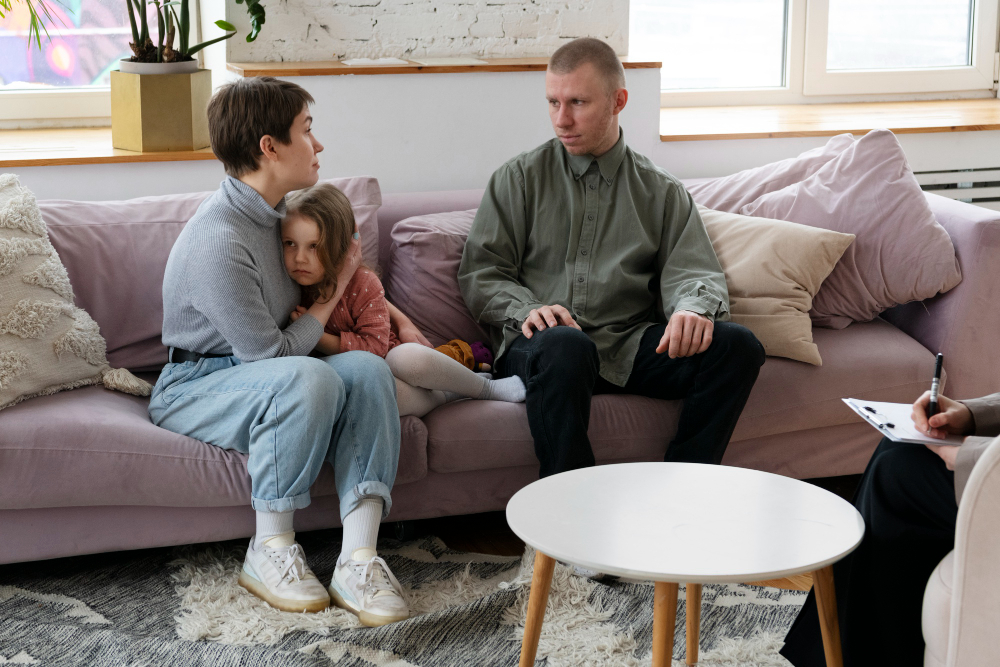
Many parents are told that their child needs to “self-regulate.” While the idea sounds reasonable, it can be misleading when taken out of developmental context. Children do not learn to regulate their emotions in isolation. Regulation is first learned in relationship, through repeated experiences of being soothed, understood, and supported by an adult whose nervous system can offer stability.
Co-regulation is not a strategy or a technique. It is a biological and relational process through which children gradually develop the capacity to settle themselves. Understanding how co-regulation works helps parents respond to stress and big emotions in ways that build long-term resilience rather than short-term compliance.
This article explores what co-regulation actually is, why it matters so deeply for emotional development, and how parents can support regulation at home in ways that feel natural and sustainable.
What Co-Regulation Really Means
Co-regulation refers to the process by which one nervous system helps stabilize another. For children, this happens primarily through relationships with caregivers. Before children can calm themselves, they rely on adults to help their bodies return to a settled state.
This support happens through:
- Tone of voice
- Facial expression
- Pace of movement
- Physical proximity
- Predictability
- Emotional attunement
When a parent remains grounded during a child’s distress, the child’s nervous system receives cues of safety. Over time, these experiences are internalized. What was once co-regulation becomes self-regulation.
Why Self-Regulation Cannot Develop Without Co-Regulation
Self-regulation is a developmental achievement, not a skill children can simply be taught. It emerges gradually as the nervous system matures and as children accumulate experiences of being regulated with others.
When children are expected to self-regulate before they are ready, they may appear:
- Defiant
- Overly emotional
- Withdrawn
- Rigid
- Anxious
These behaviors are not failures. They are signs that the child’s nervous system still needs external support.
Co-regulation provides the foundation upon which independence can grow.
The Nervous System Perspective
From a nervous system lens, dysregulation is not misbehavior. It is a physiological state. When a child becomes overwhelmed, their body shifts into survival mode. Thinking, listening, and problem-solving become difficult or impossible.
In these moments, what helps most is not explanation, consequences, or logic. What helps is an adult whose nervous system is steady enough to offer containment.
Children read safety through:
- Calm breathing
- Slower movements
- Soft eye contact
- A regulated voice
- Non-reactive presence
These cues communicate far more than words.
What Co-Regulation Looks Like in Everyday Life
Co-regulation does not require special equipment or scripted responses. It happens in small, ordinary moments throughout the day.
Examples include:
- Sitting quietly near a child who is upset rather than demanding words
- Slowing your own movements when a child is frantic
- Acknowledging feelings without trying to fix them
- Staying present during a meltdown rather than leaving the room in frustration
- Offering predictable routines that reduce uncertainty
Over time, these moments teach the child that strong feelings can be held and resolved.
Why Parents Often Struggle With Co-Regulation
Co-regulation asks a lot of parents. It requires awareness of one’s own nervous system, especially during moments of stress. Many adults did not receive consistent co-regulation themselves and may feel unsure how to provide it.
Parents may notice:
- Their own anxiety rising when their child is upset
- A strong urge to stop the behavior quickly
- Frustration when strategies do not work immediately
- Fear that co-regulation will reinforce dependence
These reactions are understandable. Co-regulation is not about never setting limits or ignoring behavior. It is about addressing the nervous system state first, so limits can actually be received.
The Difference Between Co-Regulation and Permissiveness
Co-regulation is often misunderstood as permissiveness. In reality, it supports boundaries rather than undermining them.
A co-regulating response might sound like:
- “I can see you’re really upset. I’m here with you. We’re not hitting.”
- “Your body feels overwhelmed right now. We can slow down together.”
The boundary remains intact, but it is delivered from a regulated state. This helps the child feel safe enough to comply.
How Sensory Input Supports Co-Regulation
For many children, especially those with sensory sensitivities, co-regulation is supported through the body rather than words.
Helpful sensory-based supports may include:
- Deep pressure through hugs or weighted items
- Rhythmic movement like rocking or walking
- Quiet spaces with low stimulation
- Warmth through blankets or warm drinks
- Proprioceptive activities like pushing or carrying
These inputs help settle the nervous system and make emotional processing possible.
Co-Regulation During Transitions and High-Stress Moments
Transitions are particularly challenging because they require children to shift attention, expectations, and sensory input all at once.
Co-regulation during transitions might involve:
- Previewing what will happen next
- Using consistent routines
- Slowing the pace
- Offering limited choices
- Staying physically and emotionally present
These supports reduce the likelihood of overwhelm and help children feel more in control.
The Role of Repair in Co-Regulation
No parent remains regulated all the time. What matters is not perfection, but repair.
Repair might look like:
- Acknowledging when you reacted strongly
- Reconnecting after a conflict
- Naming what happened in simple terms
- Reaffirming the relationship
Repair teaches children that relationships can withstand stress and that mistakes do not mean disconnection.
How Co-Regulation Changes Over Time
As children grow, the form of co-regulation shifts. What soothes a toddler is different from what supports a teenager. However, the underlying need remains.
Older children and teens still benefit from:
- Calm presence
- Predictable responses
- Emotional validation
- Respect for autonomy within connection
Co-regulation becomes more subtle, but it remains foundational.
How Therapy Supports Co-Regulation at Home
In experiential and relational therapy, parents are often supported alongside their children. Therapy helps parents:
- Understand their child’s nervous system patterns
- Recognize early signs of dysregulation
- Develop co-regulation strategies that fit their family
- Adjust expectations based on capacity
- Strengthen connection during stress
When parents feel more confident in how they respond, children feel more secure.
What Progress Looks Like
Progress in co-regulation does not mean the absence of big emotions. It means:
- Shorter periods of dysregulation
- Faster recovery
- Greater trust between parent and child
- Increased flexibility
- Improved communication
These shifts indicate that the nervous system is learning safety.
When Additional Support May Be Helpful
If co-regulation feels consistently out of reach, or if a child’s distress is escalating despite support, professional guidance can be helpful. Therapy can provide both children and parents with tools that are tailored to their unique patterns.
Seeking support is not a failure. It is an investment in long-term emotional health.
Final Thoughts
Co-regulation is the bridge between dependence and independence. Through repeated experiences of being settled with another person, children learn how to settle themselves. This learning happens in moments of connection, not correction.
By understanding and practicing co-regulation at home, parents offer their children a powerful foundation for emotional resilience, relational security, and lifelong self-regulation.
Supporting a child’s nervous system is not about doing more. It is about being present in the moments that matter most.